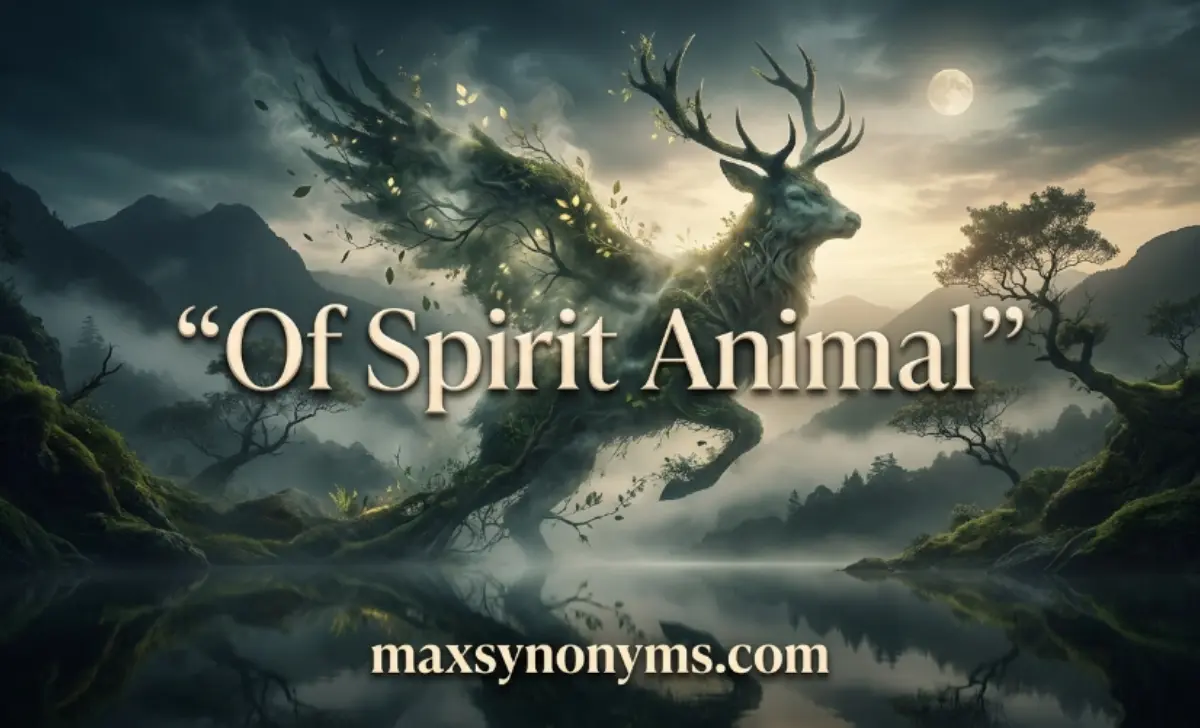
The idea of a spirit animal has become popular in modern conversations about personality, spirituality, self-discovery, and animal symbolism. People often use the term when a particular animal seems to represent their personality, strengths, values, or the qualities they want to develop.
For some people, a spirit animal is simply a symbolic animal that reflects who they are. For others, it is connected to spiritual beliefs, personal experiences, dreams, or traditional practices.
But what exactly does spirit animal mean, and how can you find an animal that feels meaningful to you?
In this guide, you will learn the meaning of spirit animal, how animal symbolism works, common examples such as the wolf, fox, owl, eagle, and bear, and the difference between a spirit animal, animal guide, power animal, and animal totem.
What Is a Spirit Animal?
A spirit animal is an animal that a person feels symbolically or spiritually connected to. It may represent certain qualities, such as courage, wisdom, freedom, protection, loyalty, or transformation.
For example, someone who values independence might identify with a wolf, while a person who connects with wisdom and observation might find an owl meaningful.
The term is used in different ways today. In casual modern English, people may use it to describe an animal that strongly represents their personality. However, the idea also overlaps with spiritual and cultural traditions in which animals have deeper symbolic or sacred meanings.
Because of this, it is useful to understand the context rather than treating every animal symbol as a universal spiritual rule.
Spirit Animal Meaning
The simplest spirit animal meaning is an animal that symbolizes qualities, characteristics, or a personal connection that feels important to someone.
An animal can represent:
- Strength and courage
- Wisdom and intuition
- Freedom and independence
- Protection and loyalty
- Transformation and personal growth
- Leadership and confidence
- Healing and renewal
- Connection with nature
The meaning can also vary from person to person. A fox, for example, may represent cleverness and adaptability to one person, while another person may associate it with independence or curiosity.
Therefore, there is not always one fixed interpretation for every animal.
What Does Your Spirit Animal Say About You?
People often connect an animal with aspects of their personality or life experiences.
Someone who is protective of family and friends may relate to the bear. A highly observant person may connect with the owl, while someone who values freedom may identify with an eagle.
This does not mean that an animal scientifically determines your personality. Instead, animal symbolism can be used as a way to reflect on your own qualities, goals, and experiences.
Think about the qualities you naturally admire. Then consider which animal represents those qualities for you.
Common Spirit Animals and Their Meanings
Different animals are commonly associated with particular qualities. These meanings are symbolic rather than universal rules.
| Animal | Common Symbolism |
|---|---|
| Wolf | Loyalty, instinct, independence |
| Fox | Cleverness, adaptability, curiosity |
| Owl | Wisdom, observation, intuition |
| Eagle | Freedom, vision, courage |
| Bear | Strength, protection, confidence |
| Lion | Leadership, bravery, power |
| Deer | Gentleness, sensitivity, peace |
| Butterfly | Transformation, change, renewal |
| Horse | Freedom, movement, strength |
| Elephant | Wisdom, memory, loyalty |
| Snake | Transformation, renewal, change |
| Tiger | Courage, confidence, determination |
These associations can help you explore animal symbolism, but your personal interpretation can be different.
Wolf Spirit Animal
The wolf spirit animal is commonly associated with loyalty, instinct, independence, and strong social bonds.
Wolves live in social groups while also being powerful independent animals. Because of this, the wolf can symbolize someone who values both personal freedom and close relationships.
Fox Spirit Animal
The fox spirit animal is often connected with cleverness, adaptability, observation, and quick thinking.
A fox can be a useful symbol for people who prefer to solve problems creatively rather than confronting every situation directly.
Owl Spirit Animal
The owl spirit animal commonly represents wisdom, observation, intuition, and awareness.
Because owls are associated with seeing and navigating through darkness, they are often used symbolically to represent insight and the ability to notice things that others may overlook.
Eagle Spirit Animal
The eagle spirit animal is often linked with freedom, courage, vision, and perspective.
Its ability to fly high makes the eagle a common symbol for seeing the bigger picture and looking beyond immediate problems.
Bear Spirit Animal
The bear spirit animal commonly represents strength, protection, confidence, and resilience.
It may appeal to someone who sees themselves as protective, strong-minded, or capable of handling difficult situations.
How to Find Your Spirit Animal
There is no single test that can scientifically determine a person’s spirit animal. Instead, finding one can be a personal process of reflection.
Start by asking yourself a few simple questions:
- Which animal have I always felt drawn to?
- Which animal’s qualities do I admire?
- Does a particular animal repeatedly appear in my dreams, thoughts, stories, or experiences?
- Which qualities am I trying to develop in my life?
- Which animal best represents my personality or values?
You can also explore an animal guide through meditation, journaling, or quiet reflection if those practices are meaningful to you.
A spirit animal quiz can be entertaining and may give you an idea to explore, but it should not be treated as a definitive spiritual answer.
Spirit Animal vs. Animal Guide
The terms spirit animal and animal guide are sometimes used interchangeably, but they can have different meanings depending on the context.
A spirit animal is generally described as an animal that symbolizes a person’s qualities, identity, or spiritual connection.
An animal guide, on the other hand, is often described as an animal that provides symbolic guidance or represents a lesson during a particular stage of life.
For example, someone might identify strongly with the wolf as a personal symbol while viewing an eagle as an animal guide during a period when they need greater perspective.
The exact distinction depends on the spiritual tradition or personal belief being discussed.
Spirit Animal vs. Power Animal
A power animal is another related term. It usually refers to an animal symbol associated with strength, protection, personal qualities, or spiritual support.
The terms can overlap, especially in modern spiritual discussions.
However, they are not automatically identical. Different traditions use these concepts in different ways, so it is better to consider the context instead of assuming that every term has exactly the same meaning.
Spirit Animal vs. Animal Totem
An animal totem can also sound similar to spirit animal, but the concepts should not simply be treated as interchangeable.
The word totem has specific cultural and historical meanings, particularly within Indigenous traditions. In those contexts, animal relationships and symbols can be connected to community, family, ancestry, identity, and spiritual practices.
Modern internet usage sometimes uses “animal totem” casually, but that can oversimplify traditions that have much deeper cultural meanings.
For general self-reflection, animal symbolism is often a clearer and less culturally specific term.
Can You Have More Than One Spirit Animal?
There is no universal rule saying that a person can have only one symbolic animal.
Someone may identify strongly with one animal because of their personality while connecting with another during a particular period of life.
For example, a person might relate to the bear because of its symbolism of strength and protection but connect with the butterfly during a major period of personal transformation.
The important part is the meaning you attach to the animal rather than collecting as many labels as possible.
Spirit Animals and Dreams
Dreams are another reason people become interested in animal symbolism.
If the same animal appears repeatedly in your dreams, you may naturally wonder whether it has a personal meaning. Rather than assuming there is one universal interpretation, consider what the animal represents to you.
For example, dreaming about a horse might make you think about freedom, movement, or independence. Someone else might associate the same animal with strength or adventure.
Your emotions and experiences surrounding the animal can be just as important as traditional symbolism.
Are Spirit Animals Part of Spirituality?
For many people, animals are part of a broader spiritual connection with nature. Animal symbolism can encourage reflection on qualities such as courage, patience, wisdom, resilience, and transformation.
At the same time, spiritual beliefs about animals differ widely between cultures and traditions. There is no single worldwide definition of a spirit animal.
It is therefore helpful to distinguish between modern personal symbolism and specific cultural or Indigenous traditions. Respecting those differences makes discussions about spirit animals more accurate and meaningful.
Frequently Asked Questions
What exactly is a spirit animal?
A spirit animal is an animal that someone associates with particular personal, symbolic, or spiritual qualities. In modern usage, it can represent personality traits, values, or qualities a person wants to develop.
How do I know my spirit animal?
Think about animals you naturally connect with, admire, or repeatedly encounter in meaningful situations. Consider their qualities and how those qualities relate to your personality and life.
What animal represents strength?
Animals such as the bear, lion, tiger, and elephant are commonly associated with strength. The exact symbolism depends on the cultural or personal context.
What animal symbolizes wisdom?
The owl is one of the most widely recognized symbols of wisdom. Elephants are also commonly associated with wisdom, memory, and experience.
What animal represents courage?
The lion, eagle, tiger, and bear are commonly used to symbolize courage, bravery, and confidence.
Can a person have more than one spirit animal?
Yes, people may identify with more than one animal symbol. One animal may represent personality, while another may symbolize a particular period, challenge, or goal in life.
Is a spirit animal the same as an animal guide?
Not necessarily. The terms can overlap, but a spirit animal is often used for personal symbolism, while an animal guide is commonly described as a symbolic source of guidance or insight.
Is a spirit animal the same as an animal totem?
No. Although the terms are sometimes used interchangeably online, totem has specific cultural meanings and should not automatically be treated as another word for a personal spirit animal.
What is a power animal?
A power animal is a term used in some spiritual contexts for an animal associated with strength, protection, guidance, or particular personal qualities.
Can a spirit animal change?
For people who use the concept personally, an animal connection may change as their experiences, priorities, or goals change. There is no universal rule requiring one permanent spirit animal.
Final Thoughts
A spirit animal can be understood as a meaningful animal symbol connected with personality, values, spirituality, or personal growth. For some people, the concept is simply a way to describe an animal that strongly reflects who they are. For others, it has a deeper spiritual meaning.
Whether you connect with the wisdom of an owl, the freedom of an eagle, the loyalty of a wolf, or the transformation represented by a butterfly, the most useful question is not simply “Which animal am I?” but “What does this animal represent to me?”
Understanding that distinction makes animal symbolism more personal and helps avoid treating different cultural and spiritual traditions as if they all mean the same thing.
Read More Blogs:
- Punctuality Synonyms: 50 Better Words for Being on Time
- Did You Receive My Email? Better Ways to Ask Politely
- Thank You for the Update: 50 Better Ways to Say It

I am Ali Hamza, a writer and language lover with four years of experience creating content about synonyms, vocabulary and English word usage. I like making words and meanings easier to understand through clear explanations and real-life examples.
As the author of maxsynonyms.com I focus on helping readers find synonyms improve their vocabulary and pick the right words for different situations. My goal is to provide easy-to-read content that helps students, writers, professionals and English learners.
Through maxsynonyms.com I am dedicated to sharing quality language tools that make learning English simple, interesting and available, to all.