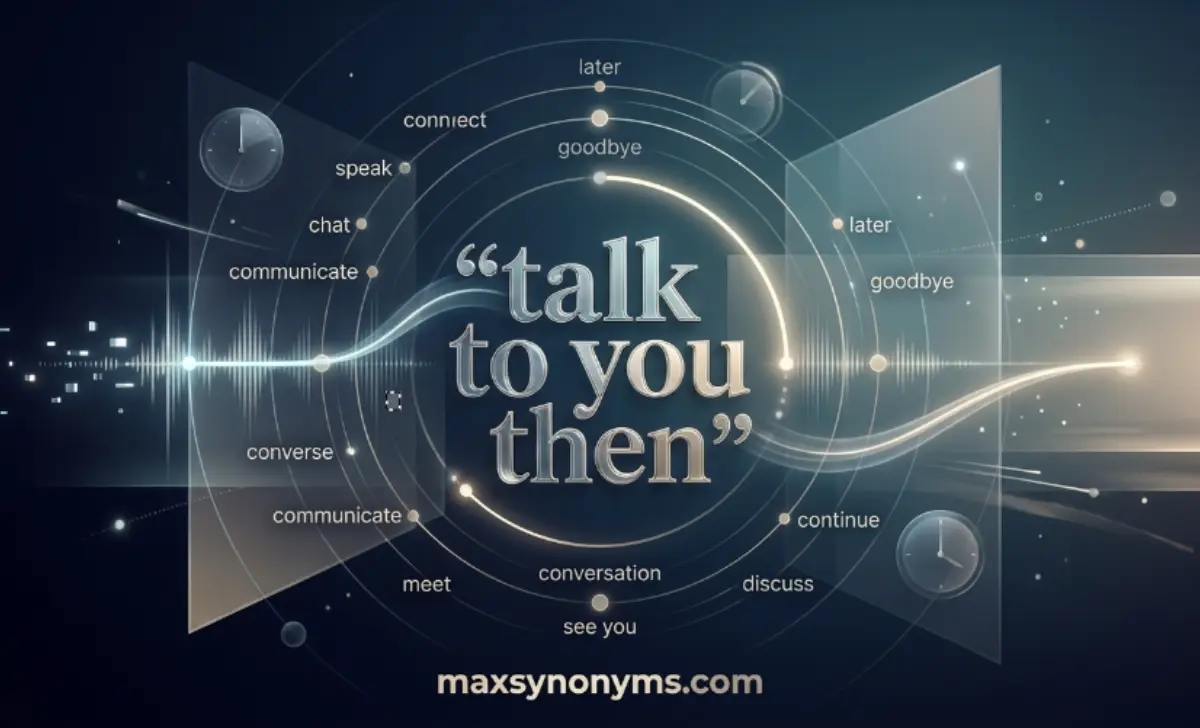
“Talk to you then” is a short phrase you may hear at the end of a call, chat, or conversation. But what does it really mean?
Simply put, “talk to you then” means that you plan to speak with someone at a specific time or after a specific event. For example, if you arrange a call for Friday, you can say, “Okay, talk to you then.”
The phrase is common in everyday English. Students, content writers, bloggers, and daily English users may all come across it.
Learning how it works can help you sound more natural in conversations and messages. It can also help you choose the right phrase for casual or professional situations.
What Does “Talk to You Then” Mean?
“Talk to you then” means “I will talk to you at that time” or “I will speak with you when that time comes.”
The word “then” points to a time already mentioned or understood.
Example:
“Can we talk tomorrow at 5?”
“Sure. Talk to you then.”
Here, “then” means tomorrow at 5.
The full sentence would be “I’ll talk to you then,” but English speakers often leave out “I’ll” in casual conversation.
Is “Talk to You Then” Correct?
Yes, “talk to you then” is correct and natural English.
It is especially common in casual conversations, phone calls, text messages, and online chats.
For example:
- “I have a meeting now. Talk to you then.”
- “Let’s meet at 3. Talk to you then.”
It works best when both people already know when they will speak again.
“Talk Then” Meaning
“Talk then” usually means “we will talk at that time.”
It is shorter than “talk to you then” and can sound more casual.
Examples:
- “See you at six. Talk then.”
- “I’ll finish work by five. Talk then.”
However, “talk to you then” is more complete and more common in everyday English.
50 Natural Alternatives to “Talk to You Then”
The following phrases are useful alternatives. Some are direct replacements, while others fit slightly different situations.
Talk to You Later
Meaning: This means you plan to speak with the person again at a later time.
Examples:
- “I need to go now. Talk to you later.”
- “I’ll call you after work. Talk to you later.”
Talk to You Soon
Meaning: This means you expect to speak with the person again soon.
Examples:
- “Thanks for your help. Talk to you soon.”
- “I have to leave now. Talk to you soon.”
Speak to You Then
Meaning: This means you will speak with the person at the agreed time.
Examples:
- “Our meeting is at ten. Speak to you then.”
- “I’ll call you tomorrow morning. Speak to you then.”
Speak to You Later
Meaning: This means you expect to speak with the person later.
Examples:
- “I’m busy right now. Speak to you later.”
- “I’ll finish this task first. Speak to you later.”
See You Then
Meaning: This means you expect to meet the person at the agreed time.
Examples:
- “The appointment is at two. See you then.”
- “Let’s meet outside the café. See you then.”
See You Soon
Meaning: This means you expect to meet the person again soon.
Examples:
- “Have a safe trip. See you soon.”
- “I’ll be back next week. See you soon.”
Talk Then
Meaning: This is a short and casual way to say you will talk at the agreed time.
Examples:
- “Call me after dinner. Talk then.”
- “I’ll be free at eight. Talk then.”
Speak Then
Meaning: This means you will speak with someone at the time already discussed.
Examples:
- “I’ll be online at nine. Speak then.”
- “Let’s finish this tomorrow. Speak then.”
I’ll Talk to You Then
Meaning: This is the complete form of “talk to you then.”
Examples:
- “Your call is scheduled for Monday. I’ll talk to you then.”
- “Let’s meet after lunch. I’ll talk to you then.”
I’ll Speak to You Then
Meaning: This is a slightly more polished way to say you will speak at the agreed time.
Examples:
- “Thank you for confirming the meeting. I’ll speak to you then.”
- “I’ll review the details first. I’ll speak to you then.”
I’ll Talk to You Later
Meaning: This means you plan to speak with someone again later.
Examples:
- “I’m heading into class. I’ll talk to you later.”
- “I need to finish dinner. I’ll talk to you later.”
I’ll Speak to You Later
Meaning: This means you will speak with someone again later.
Examples:
- “I have another call now. I’ll speak to you later.”
- “Let me check the details first. I’ll speak to you later.”
We’ll Talk Then
Meaning: This means both people will talk at the agreed time.
Examples:
- “Let’s discuss the plan tomorrow. We’ll talk then.”
- “You can tell me everything tonight. We’ll talk then.”
We’ll Speak Then
Meaning: This means both people will speak at the agreed time.
Examples:
- “The interview starts at nine. We’ll speak then.”
- “Let’s wait until tomorrow. We’ll speak then.”
Catch You Later
Meaning: This is a casual way to say you will see or talk to someone later.
Examples:
- “I’m off to work. Catch you later.”
- “Thanks for chatting. Catch you later.”
Catch You Soon
Meaning: This casual phrase means you expect to see or speak with someone soon.
Examples:
- “Enjoy your weekend. Catch you soon.”
- “I’ll be back next month. Catch you soon.”
Chat With You Later
Meaning: This means you plan to chat with the person again later.
Examples:
- “I have homework to finish. Chat with you later.”
- “I need to run now. Chat with you later.”
Chat With You Soon
Meaning: This means you expect to chat with the person again soon.
Examples:
- “Thanks for the message. Chat with you soon.”
- “I’ll send the photos later. Chat with you soon.”
Message You Later
Meaning: This means you plan to send the person a message later.
Examples:
- “I’m driving now. I’ll message you later.”
- “Let me check the details. I’ll message you later.”
Text You Later
Meaning: This means you plan to send a text message later.
Examples:
- “I’m in class right now. I’ll text you later.”
- “I need to check the time. I’ll text you later.”
Call You Later
Meaning: This means you plan to phone the person later.
Examples:
- “I’m busy right now. I’ll call you later.”
- “Give me an hour. I’ll call you later.”
Call You Then
Meaning: This means you will call the person at the time already discussed.
Examples:
- “You’ll be free at six, right? I’ll call you then.”
- “Let’s talk after dinner. I’ll call you then.”
Speak With You Later
Meaning: This is another natural way to say you will speak with someone later.
Examples:
- “I need to leave now. I’ll speak with you later.”
- “Let me finish this first. I’ll speak with you later.”
Speak With You Soon
Meaning: This means you expect to speak with the person again soon.
Examples:
- “Thank you for your time. Speak with you soon.”
- “I’ll send the report today. Speak with you soon.”
Talk With You Later
Meaning: This means you plan to talk with someone again later.
Examples:
- “I have to go now. Talk with you later.”
- “Let’s discuss the idea tomorrow. Talk with you later.”
Talk With You Soon
Meaning: This means you expect to talk with the person again soon.
Examples:
- “It was great talking with you. Talk with you soon.”
- “I’ll check my schedule. Talk with you soon.”
Until Then
Meaning: This means you will wait until the agreed time or event.
Examples:
- “Our meeting is Friday. Until then, take care.”
- “I’ll send the details tomorrow. Until then, have a good evening.”
See You Tomorrow
Meaning: This is used when you expect to meet the person the next day.
Examples:
- “We have class at nine. See you tomorrow.”
- “Thanks for today. See you tomorrow.”
Talk to You Tomorrow
Meaning: This means you plan to talk with someone the next day.
Examples:
- “I’m tired now. Talk to you tomorrow.”
- “Let’s finish this in the morning. Talk to you tomorrow.”
Speak to You Tomorrow
Meaning: This means you expect to speak with someone the next day.
Examples:
- “I’ll send the file tonight. Speak to you tomorrow.”
- “Let’s discuss the issue in the morning. Speak to you tomorrow.”
See You at the Meeting
Meaning: This tells someone you expect to meet them at a planned meeting.
Examples:
- “The meeting starts at ten. See you at the meeting.”
- “I’ll bring the documents. See you at the meeting.”
See You at Six
Meaning: This means you expect to meet the person at six o’clock.
Examples:
- “I’ll wait outside the station. See you at six.”
- “Don’t forget the tickets. See you at six.”
See You There
Meaning: This means you expect to meet someone at a place already discussed.
Examples:
- “The concert starts at eight. See you there.”
- “I’ll arrive around seven. See you there.”
Until We Talk Again
Meaning: This means goodbye until the next conversation.
Examples:
- “Take care, and until we talk again.”
- “Have a great week. Until we talk again.”
I’ll Be in Touch
Meaning: This means you plan to contact the person again.
Examples:
- “I’ll check the dates and be in touch.”
- “Thanks for your time. I’ll be in touch.”
I’ll Get Back to You
Meaning: This means you will contact someone again after checking or thinking about something.
Examples:
- “I need to check with my manager. I’ll get back to you.”
- “Let me review the offer. I’ll get back to you.”
We Can Talk Later
Meaning: This means talking can happen at a later time.
Examples:
- “I’m busy right now, but we can talk later.”
- “Let’s finish dinner first, then we can talk later.”
We Can Discuss It Then
Meaning: This means you can discuss the matter at the agreed time.
Examples:
- “Let’s wait for the manager. We can discuss it then.”
- “The meeting is tomorrow. We can discuss it then.”
Let’s Talk Later
Meaning: This suggests talking again at a later time.
Examples:
- “I need to work now. Let’s talk later.”
- “This is important, so let’s talk later.”
Let’s Talk Then
Meaning: This means you suggest talking at a specific future time.
Examples:
- “I’ll be free after seven. Let’s talk then.”
- “We can wait until Friday. Let’s talk then.”
Let’s Speak Then
Meaning: This is a simple way to suggest speaking at a future time.
Examples:
- “I’ll finish the report tonight. Let’s speak then.”
- “Tomorrow works for me. Let’s speak then.”
We’ll Catch Up Then
Meaning: This means you plan to talk about recent events at a future time.
Examples:
- “I’m busy today, but we’ll catch up then.”
- “When you visit next month, we’ll catch up then.”
We’ll Catch Up Later
Meaning: This means you plan to talk or spend time together later.
Examples:
- “I have a class now. We’ll catch up later.”
- “I need to finish this task. We’ll catch up later.”
I’ll See You Then
Meaning: This means you expect to meet the person at the agreed time.
Examples:
- “Your appointment is at three. I’ll see you then.”
- “Let’s meet outside. I’ll see you then.”
I’ll Speak With You Then
Meaning: This is a polite and complete way to confirm a future conversation.
Examples:
- “Thank you for arranging the call. I’ll speak with you then.”
- “I’ve noted the appointment. I’ll speak with you then.”
We’ll Talk at That Time
Meaning: This clearly confirms that you will talk at the agreed time.
Examples:
- “Your call is booked for Monday. We’ll talk at that time.”
- “Let’s keep the appointment. We’ll talk at that time.”
We’ll Speak at That Time
Meaning: This is a clear way to confirm a future conversation.
Examples:
- “The interview is at eleven. We’ll speak at that time.”
- “The call is scheduled for Friday. We’ll speak at that time.”
I Look Forward to Speaking With You
Meaning: This is a polite and professional way to show that you expect a future conversation.
Examples:
- “Thank you for arranging the interview. I look forward to speaking with you.”
- “I appreciate your message. I look forward to speaking with you.”
I Look Forward to Talking With You
Meaning: This is a friendly and professional way to show that you expect to talk later.
Examples:
- “Thank you for your email. I look forward to talking with you.”
- “I’ll review the proposal first. I look forward to talking with you.”
We’ll Connect Then
Meaning: This means you and another person will contact or meet each other at the agreed time.
Examples:
- “The call is set for Friday. We’ll connect then.”
- “I’ll send the calendar invite. We’ll connect then.”
I’ll Connect With You Then
Meaning: This means you plan to contact or meet someone at the agreed time.
Examples:
- “The session begins at two. I’ll connect with you then.”
- “I’ve saved the meeting time. I’ll connect with you then.”
How Do You Reply to “I’ll Talk to You Later”?
The best reply depends on the situation. You can keep it simple and natural.
Common replies include:
- “Sure, talk to you later.”
- “Okay, speak to you later.”
- “Sounds good.”
- “Sure, talk soon.”
- “Alright, take care.”
- “Okay, catch you later.”
For a friendly chat, “Sure, talk to you later” works well. In a more professional setting, “Sounds good, speak to you later” can sound more polished.
How Do You Reply to “Can I Talk to You?”
The answer depends on whether you are free.
If you are available:
- “Sure, what’s up?”
- “Of course. What do you need?”
- “Sure, I’m listening.”
If you are busy:
- “Sure, can we talk later?”
- “I’m busy right now. Can we talk this evening?”
- “Not right now, but I can talk after lunch.”
The key is to give a clear answer rather than leaving the person unsure.
How Do You Say “Talk to Me” in Different Ways?
“Talk to me” can sound different depending on your tone.
Natural alternatives include:
- “Tell me what happened.”
- “Can we talk?”
- “Tell me about it.”
- “I’m listening.”
- “Let’s talk.”
- “What’s on your mind?”
- “Can you tell me more?”
- “I’d like to hear from you.”
For example, “What’s on your mind?” can sound warmer when someone seems worried or upset.
What Can You Say Instead of “Talk to You Later”?
You have many choices depending on the situation.
For casual English, try:
- “Talk soon.”
- “Catch you later.”
- “See you later.”
- “Speak soon.”
- “Chat later.”
For a more professional setting:
- “I’ll speak with you later.”
- “I’ll get back to you.”
- “I’ll be in touch.”
- “I look forward to speaking with you.”
Is “Talk to You Then” Formal?
“Talk to you then” is not strongly formal or informal. It is neutral and very common in everyday English.
However, in a formal email, a fuller phrase may sound better.
Instead of:
“Talk to you then.”
You could write:
“I look forward to speaking with you then.”
Or:
“I’ll speak with you at the scheduled time.”
The best choice depends on your relationship with the reader and the setting.
How to Professionally Say “Talk to You Then”
For professional communication, you can use:
- “I’ll speak with you then.”
- “I look forward to speaking with you then.”
- “I look forward to our conversation.”
- “I’ll be in touch at the agreed time.”
- “I look forward to discussing this with you.”
- “I’ll speak with you at the scheduled time.”
For example:
“Thank you for confirming the meeting. I look forward to speaking with you then.”
This sounds more polished than the casual “Talk to you then.”
Is “Talk to You Tomorrow” Correct?
Yes. “Talk to you tomorrow” is correct and natural.
It means you expect to speak with the person tomorrow.
For example:
“I’m heading home now. Talk to you tomorrow.”
You can also say:
“I’ll talk to you tomorrow.”
The second version is a complete sentence, while the first is a common shortened farewell.
Is “Talk to You Soon” Correct?
Yes. “Talk to you soon” is a common English expression.
It means you expect to speak with someone again soon, but it does not give an exact time.
Compare these:
- Talk to you then → a specific time is understood.
- Talk to you soon → the next conversation is expected soon.
- Talk to you later → you will talk at a later time, but no exact time is given.
“Talk to You Then” vs. “Talk to You Later”
These phrases are similar, but they do not mean exactly the same thing.
| Phrase | Main idea |
|---|---|
| Talk to you then | Speak at a specific time |
| Talk to you later | Speak at some later time |
| Talk to you soon | Speak again soon |
| See you then | Meet at a specific time |
| Speak to you later | Speak again later |
For example, if someone says, “I’ll call you at 7,” you can reply, “Talk to you then.”
If they simply say, “I’ll call you later,” you can reply, “Talk to you later.”
“Talk to You Then” vs. “See You Then”
The main difference is the action.
Talk to you then focuses on speaking.
See you then usually focuses on meeting in person, although it can sometimes be used more loosely.
For example:
“Our video call is at 5. Talk to you then.”
But:
“Dinner is at 7. See you then.”
“Talk to You Then” vs. “Speak to You Then”
Both are correct.
Talk to you then sounds natural and conversational.
Speak to you then can sound a little more polished or formal.
For example:
Casual:
“Okay, talk to you then.”
Professional:
“Thank you for confirming. I’ll speak with you then.”
The difference is mainly about tone, not meaning.
“Talk to You Then” in an Email
You can use the phrase in an email when the tone is friendly or neutral and a future conversation has already been arranged.
For example:
“Thanks for confirming the meeting time. Talk to you then.”
For a formal business email, this may be better:
“Thank you for confirming the meeting. I look forward to speaking with you then.”
This keeps the message warm while sounding more professional.
“Talk to You Then” in a Text Message
“Talk to you then” works very well in text messages.
For example:
“I’ll call you after dinner.”
“Okay, talk to you then!”
It is short, clear, and natural. You do not need to write the full sentence every time.
Common Mistakes With “Talk to You Then”
One common mistake is using “then” when no future time has been established.
For example:
“I’ll talk to you then.”
If the other person does not know what “then” refers to, the sentence may feel unclear.
Instead, mention the time:
“I’ll talk to you tomorrow at six.”
Then you can later say:
“Great, talk to you then.”
Another mistake is treating “talk to you then” as highly formal. It is acceptable in many situations, but a more polished phrase is better for formal business communication.
Final Thoughts on “Talk to You Then”
“Talk to you then” is a simple, natural English phrase used to confirm a future conversation. The word “then” points to a time that both people already know.
It works well in conversations, texts, and friendly messages.
When you need a more formal tone, try “I’ll speak with you then” or “I look forward to speaking with you then.” Learning these small differences can make your English sound smoother and more natural.
Practice them in texts, emails, and daily conversations, and you will soon know which expression fits each situation.
Read More Blogs:
- Synonyms for Principle: 50 Clear Alternatives for Better English
- Synonyms for Particular: 50 Better Words to Use in English

I am Ali Hamza, a writer and language lover with four years of experience creating content about synonyms, vocabulary and English word usage. I like making words and meanings easier to understand through clear explanations and real-life examples.
As the author of maxsynonyms.com I focus on helping readers find synonyms improve their vocabulary and pick the right words for different situations. My goal is to provide easy-to-read content that helps students, writers, professionals and English learners.
Through maxsynonyms.com I am dedicated to sharing quality language tools that make learning English simple, interesting and available, to all.