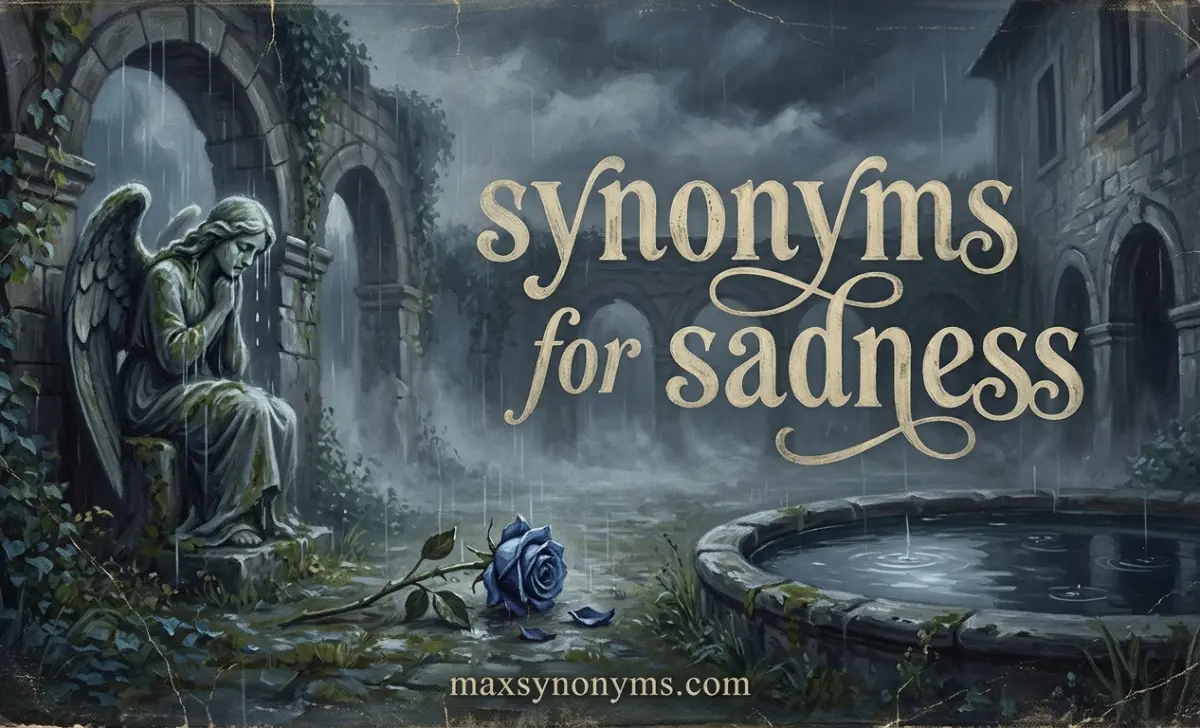
Sadness is a feeling everyone experiences, but the word sad cannot describe every kind of sorrow. Sometimes you feel disappointed after a setback.
Other times, you carry a quiet ache that is difficult to explain. The right word can help you express these emotions more clearly.
There are many synonyms for sadness, including sorrow, grief, melancholy, heartache, and despair. Some sound poetic or elegant, while others work better in professional conversations or everyday speech.
This guide explores common and rare words for sadness, alternatives to “very sad” and “I’m sad,” and expressions for peaceful sadness.
You will also find meanings and examples to help you choose words that fit your feelings and writing style.
Quick Answer
The best synonyms for sadness include sorrow, grief, melancholy, unhappiness, misery, heartache, despair, dejection, gloom, and despondency.
Each word expresses a slightly different feeling:
- Sorrow: Deep sadness, often caused by loss or disappointment.
- Grief: Intense sadness, especially after someone dies or a significant loss occurs.
- Melancholy: A quiet, reflective, or lingering sadness.
- Heartache: Emotional pain, often connected to love, loss, or disappointment.
- Despair: Deep sadness combined with a sense of hopelessness.
- Dejection: Low spirits caused by disappointment or failure.
- Gloom: A feeling of sadness or a lack of hope.
- Misery: Severe unhappiness or emotional suffering.
- Despondency: A state of low spirits and reduced hope.
- Wistfulness: Gentle sadness mixed with longing or nostalgia.
For example, you might feel disappointment after missing an opportunity, heartache after a breakup, or grief after losing someone you love.
10 Common Synonyms for Sadness With Meanings
These words are useful in everyday conversations, essays, stories, and personal writing.
| Synonym | Meaning | Example |
|---|---|---|
| Sorrow | Deep sadness | She felt sorrow after saying goodbye. |
| Grief | Deep sadness caused by loss | He needed time to process his grief. |
| Melancholy | Quiet or thoughtful sadness | A sense of melancholy filled the room. |
| Unhappiness | The state of not feeling happy | His unhappiness grew over time. |
| Misery | Severe unhappiness or suffering | She wanted to escape the misery of the situation. |
| Heartache | Deep emotional pain | The song reminded him of an old heartache. |
| Despair | Deep sadness with little hope | She refused to surrender to despair. |
| Dejection | Low spirits after disappointment | He hid his dejection after the interview. |
| Gloom | A feeling of sadness or hopelessness | The news cast a gloom over the family. |
| Distress | Emotional pain, worry, or suffering | The sudden change caused considerable distress. |
Examples
- “I felt sorrow when my childhood friend moved away.”
- “Her expression revealed the disappointment she was trying to hide.”
- “The old photograph filled him with melancholy.”
- “Despite the setback, she found a way forward instead of giving in to despair.”
Although these words overlap, they are not interchangeable in every situation. Grief often relates to loss, while despair emphasizes hopelessness.
How Do You Say “Sad” in a Poetic Way?
Poetic language can make sadness feel more vivid and expressive. Instead of using sad, you can choose words that suggest longing, quiet pain, or a heavy heart.
| Poetic word or phrase | Meaning | Example |
|---|---|---|
| Melancholy | Quiet, reflective sadness | A melancholy silence settled over the garden. |
| Wistful | Sad in a gentle, longing way | She gave the old house a wistful glance. |
| Forlorn | Lonely, abandoned, or hopeless | A forlorn figure stood beneath the rain. |
| Mournful | Expressing sorrow | A mournful melody drifted through the hall. |
| Woeful | Full of sadness or distress | He wore a woeful expression. |
| Lamenting | Expressing grief or regret | She sat by the window, lamenting what might have been. |
| Desolate | Empty, lonely, or deeply sorrowful | The empty station felt desolate after his departure. |
| Heartbroken | Experiencing intense emotional pain | The heartbroken poet turned to writing. |
| Plaintive | Sounding sad and full of longing | A plaintive voice called from the distance. |
| Elegiac | Reflecting sorrow, remembrance, or loss | The novel has an elegiac tone. |
Examples
- “A melancholy evening reminded her of the past.”
- “He looked forlorn as the last train disappeared.”
- “Her plaintive words expressed the pain she could not hide.”
- “The poem carried an elegiac sense of loss.”
For creative writing, melancholy, wistful, and forlorn are especially useful. They express different shades of sadness without repeatedly using the same word.
What Is an Aesthetic or Classy Word for Sad?
If you want a word that sounds elegant, thoughtful, or visually evocative, consider melancholy, wistful, pensive, somber, or elegiac. These words often appear in poetry, literature, reflective captions, and descriptive writing.
- Melancholy: A quiet, lingering sadness.
- Wistful: A gentle sadness connected to longing.
- Pensive: Deep in thought, sometimes with a serious or sad mood.
- Somber: Serious, subdued, or gloomy.
- Elegiac: Expressing sorrow, remembrance, or mourning.
- Forlorn: Lonely and seemingly without hope.
- Rueful: Showing regret or sadness about something.
- Mournful: Clearly expressing grief or sorrow.
Examples
- “A wistful smile crossed her face.”
- “He watched the sunset with a pensive expression.”
- “The film has a somber beauty.”
- “Her words carried a rueful note.”
- “The story’s elegiac atmosphere made its ending especially moving.”
The word aesthetic does not have one fixed synonym for sadness. Choose melancholy for reflective sadness, wistful for longing, or somber for a serious mood.
What Can I Say Instead of “Very Sad”?
When very sad feels too simple, choose a more precise word that communicates the intensity or cause of the emotion.
| Alternative | Best use |
|---|---|
| Heartbroken | Deep emotional pain, often after a breakup or loss |
| Devastated | Overwhelmed by a painful event |
| Grief-stricken | Deeply affected by a loss |
| Miserable | Extremely unhappy |
| Despondent | Very low in spirits and lacking hope |
| Desolate | Feeling deeply lonely or empty |
| Distraught | Extremely upset and unable to think calmly |
| Inconsolable | Unable to be comforted |
| Overwhelmed with sorrow | Experiencing intense sadness |
| Filled with despair | Feeling profound sadness and hopelessness |
Examples
Instead of saying, “She was very sad after the breakup,” you could write:
- “She was heartbroken after the breakup.”
- “He felt devastated when his plans fell apart.”
- “The family was grief-stricken after their loss.”
- “She became distraught when she heard the unexpected news.”
- “He felt despondent after several unsuccessful attempts.”
Use heartbroken for emotional pain, devastated for a powerful reaction to an event, and despondent when sadness comes with a loss of hope.
How Do You Say “I’m Sad” Professionally or Formally?
In professional communication, you may want to explain your feelings without sounding too casual or overly emotional. The best alternative depends on whether you are discussing disappointment, a difficult situation, or personal circumstances.
Here are some useful expressions:
- “I feel disappointed by the outcome.”
- “I am saddened by this development.”
- “This situation has been emotionally difficult for me.”
- “I am concerned and disappointed by what happened.”
- “I find this outcome discouraging.”
- “I am experiencing a difficult period.”
- “The news has caused me considerable distress.”
- “I feel disheartened by these results.”
Examples
Instead of writing, “I’m sad that I didn’t get the promotion,” you could say:
“I am disappointed that I was not selected for the promotion, but I appreciate the opportunity to be considered.”
Instead of saying, “I’m sad about the team’s decision,” you could write:
“I was saddened by the team’s decision and would appreciate an opportunity to understand the reasoning behind it.”
For a formal email, disappointed, saddened, and discouraged are often appropriate. If you are discussing a personal matter, “I’m going through a difficult time” can sound natural and respectful without sharing more than you want to.
What Can I Say Instead of “I’m Sad”?
Not every conversation needs formal language. When talking to a friend, family member, or someone you trust, you can express sadness in a direct and natural way.
Try these alternatives:
- “I’m feeling down.”
- “I’m feeling low today.”
- “I’m a little upset.”
- “I’m feeling blue.”
- “I’m having a hard time.”
- “I’m feeling disappointed.”
- “My heart feels heavy.”
- “I’m struggling emotionally.”
- “I’m not feeling like myself.”
- “I’m feeling a bit overwhelmed.”
Examples
- “I’m feeling low because my friend is moving away.”
- “I’m upset about what happened yesterday.”
- “I’m having a hard time dealing with the changes.”
- “My heart feels heavy when I think about the goodbye.”
Choose a phrase that matches what you actually feel. Upset is broad, disappointed points to unmet expectations, and feeling down usually describes a low mood.
What Is a Slang Synonym for Sad?
Informal English includes many ways to describe sadness. Some are common in everyday conversation, while others sound more playful or casual.
| Slang or informal phrase | Meaning | Example |
|---|---|---|
| Feeling blue | Feeling sad | I’m feeling blue today. |
| Down in the dumps | Feeling unhappy or low | He’s been down in the dumps lately. |
| Bummed out | Disappointed or sad | I was bummed out when the event got canceled. |
| Down bad | In a difficult emotional or romantic situation, depending on context | He’s down bad after the breakup. |
| In the feels | Experiencing strong emotions | That song has me in my feels. |
| Crushed | Deeply disappointed or upset | She was crushed by the rejection. |
| Beat up | Emotionally or physically worn down, depending on context | I feel emotionally beat up after that week. |
| A bit gutted | Very disappointed or upset; especially common in British English | I’m gutted that we lost. |
Examples
- “I was bummed out when my plans fell through.”
- “She’s been down in the dumps since moving away.”
- “That ending really got me in my feels.”
- “He was gutted when his team lost the final.”
Slang varies by age, region, and social group. Down bad can suggest romantic longing or desperation rather than sadness alone, while gutted often emphasizes disappointment.
What’s a Word for Peaceful Sadness?
Sometimes sadness is not overwhelming or painful. It may feel quiet, reflective, or mixed with appreciation for something that has passed. Words such as melancholy and wistfulness can describe this mood.
- Melancholy: A quiet, thoughtful sadness.
- Wistfulness: Gentle sadness mixed with longing.
- Nostalgia: A sentimental feeling about the past that may include both happiness and sadness.
- Pensiveness: A thoughtful, reflective state that can seem sad.
- Bittersweetness: A mixture of happiness and sadness.
- Serene melancholy: A descriptive phrase for sadness that feels calm or peaceful.
- Quiet sorrow: A gentle or subdued expression of sadness.
- Yearning: A deep longing for something or someone, sometimes accompanied by sadness.
Examples
- “She felt a gentle melancholy while looking through old photographs.”
- “The reunion left him with a bittersweet feeling.”
- “A sense of nostalgia washed over her as she remembered childhood.”
- “He watched the rain in a state of quiet sorrow.”
There is no single word that always means “peaceful sadness.” Melancholy is a strong general choice, while wistfulness suggests longing and bittersweetness combines pleasant and painful feelings.
What Is a Rare Word for Sadness?
Some less common words can make writing more distinctive. However, rare words work best when their meanings fit the context rather than simply making a sentence sound complicated.
| Word | Meaning | Example |
|---|---|---|
| Dolor | Sorrow or emotional pain | The poem expresses dolor after a painful farewell. |
| Dolorous | Full of sorrow or distress | A dolorous melody filled the room. |
| Woebegone | Looking deeply sad or miserable | He wore a woebegone expression. |
| Disconsolate | Unable to be comforted | She felt disconsolate after the loss. |
| Lachrymose | Tearful or inclined to cry | The lachrymose scene moved the audience. |
| Rueful | Showing regret or sorrow | He gave a rueful smile. |
| Forlorn | Lonely, abandoned, or hopeless | A forlorn figure waited outside. |
| Despondency | A state of low spirits and little hope | She struggled with despondency after the setback. |
| Plaintiveness | The quality of sounding sad or full of longing | The plaintiveness of the song stayed with him. |
| Mournfulness | The quality of expressing grief | The passage is marked by mournfulness. |
Examples
- “The writer used dolorous imagery to describe the loss.”
- “His rueful smile suggested that he regretted his decision.”
- “The character’s disconsolate mood lasted for days.”
- “A woebegone expression appeared on her face.”
For everyday writing, melancholy, forlorn, and despondent are more familiar. Words such as dolor and lachrymose are better suited to literary or advanced vocabulary contexts.
What Is Extreme Sorrow Called?
Extreme sorrow can be described using words such as anguish, grief, devastation, despair, and heartbreak. The most accurate choice depends on what caused the sadness and how it affects the person.
- Anguish: Severe emotional pain or suffering.
- Grief: Deep sorrow, particularly after a death or major loss.
- Despair: Profound sadness accompanied by hopelessness.
- Devastation: Intense emotional shock or distress following a painful event.
- Heartbreak: Deep emotional pain, often related to love or loss.
- Agony: Severe physical or emotional suffering.
- Desolation: A profound sense of emptiness, loneliness, or sorrow.
- Wretchedness: A state of extreme unhappiness or misery.
Examples
- “She experienced deep anguish after the sudden separation.”
- “The family was overwhelmed by grief.”
- “The unexpected news left him feeling devastated.”
- “After the relationship ended, she struggled with heartbreak.”
These words describe intense emotions, but their meanings differ. Grief often relates to loss, anguish emphasizes suffering, and despair adds a sense of hopelessness.
What Is a Deeper Word for Sorrow?
If sorrow feels too general, choose a word that communicates a more specific kind of emotional pain.
- Anguish: Sorrow that feels intensely painful.
- Desolation: A profound feeling of emptiness or loneliness.
- Grief: Deep sorrow associated with loss.
- Heartache: Personal emotional pain.
- Despair: Sorrow accompanied by hopelessness.
- Woe: A literary word for sorrow or distress.
- Lament: An expression of grief, sorrow, or regret.
- Bereavement: The state of losing someone through death and the grief associated with that loss.
Examples
- “The letter revealed the anguish she had kept hidden.”
- “A feeling of desolation remained after everyone left.”
- “He expressed his woe through poetry.”
- “Her song became a lament for the life she had lost.”
For most situations, anguish is a strong alternative when you want to emphasize the depth of sorrow. Use desolation for emptiness, despair for hopelessness, and lament when describing an expression of grief.
Sadness vs. Grief vs. Melancholy vs. Despair
These words are related, but they describe different emotional experiences.
| Word | Main meaning | Typical context |
|---|---|---|
| Sadness | A general feeling of unhappiness | Disappointment, separation, or a difficult day |
| Grief | Deep sorrow, often following a loss | Bereavement or major personal loss |
| Melancholy | Quiet, lingering, reflective sadness | Memories, literature, or thoughtful moods |
| Despair | Deep sadness with a sense of hopelessness | Feeling that a difficult situation cannot improve |
| Anguish | Severe emotional suffering | Intense personal pain |
| Wistfulness | Gentle sadness mixed with longing | Remembering the past or something unattainable |
| Heartache | Deep personal emotional pain | Romantic loss or separation |
Examples
- Missing an old friend may bring sadness.
- Losing a loved one may lead to grief.
- Remembering childhood can create melancholy.
- Feeling that there is no way forward may lead to despair.
Understanding these differences helps you choose more precise words and avoid using every synonym as if it meant exactly the same thing.
How to Choose the Right Synonym for Sadness
The best synonym depends on your purpose, audience, and emotional meaning.
For everyday conversation: Use sad, upset, unhappy, down, or disappointed.
For intense emotions: Choose heartbroken, devastated, anguished, or grief-stricken.
For poetic writing: Try melancholy, wistful, forlorn, mournful, or elegiac.
For formal communication: Use saddened, disappointed, distressed, or discouraged.
For casual slang: Consider feeling blue, bummed out, gutted, or down in the dumps.
For peaceful sadness: Choose melancholy, wistfulness, nostalgia, or bittersweetness.
For advanced vocabulary: Consider dolor, disconsolate, dolorous, or lachrymose when they suit the tone.
For example, “I am sad about the result” is clear, but “I feel discouraged by the result” emphasizes reduced confidence. Similarly, “She was sad to leave” communicates a general feeling, while “She felt wistful as she said goodbye” adds a sense of longing.
Frequently Asked Questions About Synonyms for Sadness
What is a poetic synonym for sadness?
Melancholy, sorrow, wistfulness, heartache, and woe are useful poetic alternatives. Melancholy suggests reflective sadness, while wistfulness expresses longing.
What are some fancy words for sorrow?
Fancy or literary words include anguish, desolation, dolor, lament, melancholy, and disconsolation. Choose a word that matches the emotion rather than using a rare term just for effect.
What is a classy word for sad?
Melancholy is an elegant choice for reflective sadness. Somber works for a serious mood, while wistful describes sadness mixed with longing.
What can I say instead of “very sad”?
You can say heartbroken, devastated, grief-stricken, despondent, or distraught. Each describes a different kind of intense sadness.
How do I say “I’m sad” in a formal way?
You could say, “I am feeling disappointed,” “I am saddened by these events,” or “This situation has caused me considerable distress.”
What is a slang synonym for sad?
Common informal alternatives include bummed out, feeling blue, down in the dumps, and gutted. Their usage depends on the region and context.
What is a word for peaceful sadness?
Melancholy often describes quiet, reflective sadness. Wistfulness suggests longing, while bittersweetness combines happiness and sadness.
What is a rare word for sadness?
Dolor is a rare or literary word for sorrow. Dolorous means full of sorrow, and disconsolate describes someone who cannot easily be comforted.
What is extreme sorrow called?
Extreme sorrow may be called anguish, grief, despair, devastation, or heartbreak. The best word depends on the cause and nature of the emotional pain.
What is a deeper word for sorrow?
Anguish is a powerful word for intense emotional suffering. Desolation emphasizes emptiness, while despair suggests a loss of hope.
Conclusion
Sadness can take many forms, from mild disappointment to profound grief. Words such as sorrow, melancholy, heartache, and despair help express these differences more precisely.
For poetic writing, wistful and forlorn can add emotional depth, while disappointed and saddened work well in formal communication. If you want a more casual expression, phrases like feeling blue or bummed out sound natural in conversation.
The best synonym is the one that accurately reflects the feeling you want to describe. With the right vocabulary, you can make everyday conversations, personal messages, and creative writing clearer and more expressive.
Read More Blogs:
- Love Synonyms: Romantic, Deep, and Unique Ways to Say Love
- Success Synonyms: Find the Right Word for Every Achievement
- Synonyms for Sad: 50 Words for Different Feelings

I am Ali Hamza, a writer and language lover with four years of experience creating content about synonyms, vocabulary and English word usage. I like making words and meanings easier to understand through clear explanations and real-life examples.
As the author of maxsynonyms.com I focus on helping readers find synonyms improve their vocabulary and pick the right words for different situations. My goal is to provide easy-to-read content that helps students, writers, professionals and English learners.
Through maxsynonyms.com I am dedicated to sharing quality language tools that make learning English simple, interesting and available, to all.